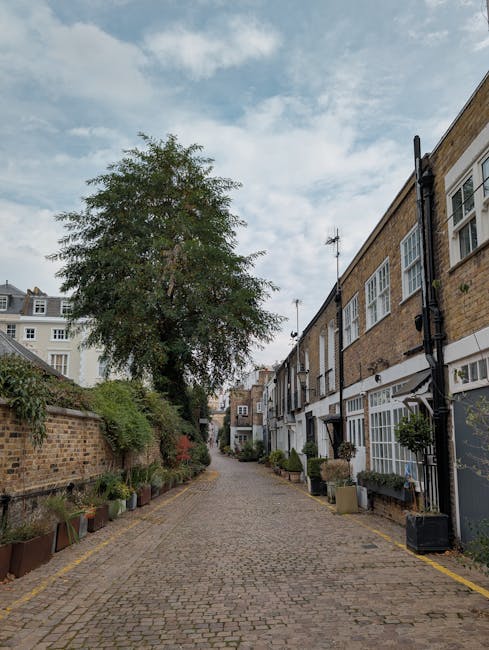
Affordable gardeners for Fitzrovia W1T mews gardens: a practical guide for compact London outdoor spaces
If you are looking for Affordable gardeners for Fitzrovia W1T mews gardens, you are probably dealing with the same thing many central London homeowners face: a small space that still needs proper care, regular attention, and a light touch. Mews gardens can look effortless when they are well kept, but truth be told, they take more planning than people expect. Tight access, shaded corners, mature planting, bins, paving, privacy, and neighbours very close by all change the way a garden should be maintained.
This guide breaks down what affordable gardening really means in Fitzrovia W1T, how mews gardens are usually looked after, what services make sense, and where you can save money without letting the space slide. You will also find a practical checklist, a comparison table, and some straightforward advice for choosing the right support. Nothing fluffy. Just the kind of advice that helps you decide what to do next.
Why Affordable gardeners for Fitzrovia W1T mews gardens Matters
Mews gardens in Fitzrovia are rarely big, but they are often very visible. That is part of the charm. It is also why basic neglect shows up fast. A few weeks of unchecked growth can make a small courtyard feel cramped, untidy, or even less usable. A path gets slippery. A hedge starts leaning into a neighbour's side. Pots dry out because nobody noticed the sheltered corner. Small things, but they add up.
Affordable gardening matters here because regular care is usually cheaper than rescue work. A garden that is kept on a steady, manageable schedule often needs fewer heavy interventions. That means less waste, less labour, and fewer unpleasant surprises. In a compact Fitzrovia setting, a smart maintenance routine is often better value than one-off big jobs. You do not need a grand redesign every season. Sometimes you just need someone reliable with shears, a mower, and a sensible eye.
There is also a lifestyle angle. Mews gardens are often used for morning coffee, a few potted herbs, a quiet read after work, or a small gathering when the weather behaves. If the space is tidy and healthy, you get much more from it. And if the garden is attached to a home office, rental property, or small business entrance, presentation matters even more.
Expert summary: In compact London gardens, affordability is less about the lowest headline price and more about choosing the right level of service, the right frequency, and the least wasteful way of working.
For many properties, the sensible starting point is a mix of light maintenance and occasional specialist help. You can explore broader support through the services overview, then narrow down the tasks that genuinely need attention rather than paying for extras you will not use.
How Affordable gardeners for Fitzrovia W1T mews gardens Works
Affordable gardening for a mews setting usually begins with a quick assessment of the space. A good gardener will not treat a courtyard in Fitzrovia the same way they would a larger suburban lawn. They will look at access, paving, drainage, shade, planting density, hedge height, bin storage, and whether there is a lawn, gravel, decking, or a combination of surfaces. That first look shapes everything else.
From there, the work is usually split into tasks that can be handled routinely and tasks that only need occasional attention. For example, mowing, edging, weeding, and deadheading may be part of a regular plan, while hedge shaping, clearance, or tree work may be seasonal or occasional. The goal is to keep the garden under control without paying for unnecessary labour each visit.
In practice, affordability often comes from three things:
- Efficient scheduling so the garden is maintained before problems grow larger.
- Task prioritisation so effort goes into the parts that affect appearance, safety, and plant health.
- Smart material handling so waste is removed responsibly and no time is lost on avoidable rework.
If you want a clearer idea of what regular upkeep can include, the garden maintenance service is the most relevant place to start. For more intensive jobs, such as post-tenancy tidy-ups or overgrown corners, a garden clearance may make more sense before maintenance begins.
One thing people often miss: affordable does not mean rushed. A careful gardener who works neatly in a tight mews space can actually save time, because there is less accidental damage and less backtracking. Let's face it, in a narrow courtyard, one careless wheelbarrow route can turn into a small mess very quickly.
Key Benefits and Practical Advantages
The most obvious benefit is cost control. But the real value goes deeper than that. When mews gardens are managed well, they become easier to enjoy and cheaper to maintain over time. That is the sweet spot.
- Better use of a small space: Clean lines, trimmed planting, and clear paths make the garden feel larger.
- Less long-term expense: Regular small jobs are usually easier to budget for than emergency tidying.
- Healthier planting: Shrubs, hedges, and borders respond better to consistent care than sporadic heavy cuts.
- Improved safety: Slippery moss, loose debris, and obstructed walkways are dealt with before they become an issue.
- More privacy and calm: A well-shaped hedge or screen planting can make a compact garden feel much more secluded.
- Better property presentation: Useful if you are renting, selling, or simply want the entrance to look cared for.
There is also a useful psychological benefit. A neat garden changes how you use it. You step outside more often. You notice the scent of fresh cut grass, the sound of pruning, the light on a clean patio in the late afternoon. Small thing, but it matters. A neglected corner quietly tells you not to bother. A tidy garden does the opposite.
If sustainability matters to you, it can be worth reading the company's approach to recycling and sustainability. Responsible green waste handling and lower-waste working habits are often part of what makes a service feel genuinely well run.
Who This Is For and When It Makes Sense
Affordable gardeners for Fitzrovia W1T mews gardens are a sensible fit for a wide range of property types and household needs. You do not need a huge garden to justify help. In fact, small gardens often benefit the most because even minor neglect is easy to see.
This kind of support makes sense if you are:
- a homeowner who wants the garden to look good without spending every weekend on it;
- a landlord trying to keep a mews property presentable between tenancies;
- a busy professional with little time for pruning, mowing, and clearing up;
- an older resident who prefers practical help with heavier or repetitive tasks;
- someone preparing to sell or let a property and wanting the outside space to look cared for;
- a resident with a courtyard, terrace, or small enclosed garden that needs light but regular maintenance.
It also makes sense when the garden has become slightly awkward. Maybe there is a hedge that has gotten away from you. Maybe the lawn is patchy and needs careful attention rather than a dramatic overhaul. Maybe the patio is collecting leaf litter and moss because the space is shaded for much of the day. These are normal problems. Very normal.
In those situations, a skilled gardener can help you decide whether the job needs routine maintenance, a one-off tidy-up, or a more significant improvement project. If the space needs shaping or reworking rather than just upkeep, it may be worth looking at landscape gardening or broader landscaping support.
Step-by-Step Guidance
If you want to get the best value from a gardener in Fitzrovia, it helps to approach the job in a structured way. You do not need a long technical plan. Just a sensible one.
- List the actual problems. Is it overgrowth, weeds, a tired lawn, poor planting, blocked drainage, or all of the above? Be specific.
- Separate routine work from one-off work. Mowing and weeding may need regular care, while hedge shaping or clearance may only be needed now and then.
- Measure the access. Narrow side paths, internal courtyards, locked gates, basement steps, and limited storage all affect how long a job takes.
- Decide what matters most. For some people, it is presentation. For others, it is safety, privacy, or simply making the space usable again.
- Ask for a clear scope. Know what is included and what is not. That keeps costs realistic and avoids awkward assumptions.
- Choose a maintenance rhythm. A little and often approach is often the cheapest route in the long run.
- Review the results after the first visit. A good gardener should make the space easier to manage, not create more work for you.
To compare specific work types, it is often helpful to look at lawn mowing for grassed areas, hedge trimming for privacy screens and boundary planting, and tree lopping and removal only where trees are genuinely becoming a safety or light issue. Not every tall branch needs a dramatic solution. Sometimes it just needs the right cut, in the right season.
Expert Tips for Better Results
A few small decisions can make a noticeable difference to both cost and outcome.
First, keep the brief tight. If you only need the front and rear mews garden refreshed, say so. If you want regular maintenance, set the cadence early. A vague request often leads to a vague quote, and that is where budgets start drifting. Nobody loves that.
Second, group related tasks. If hedges, borders, and green waste all need attention, doing them in one visit is often more efficient than splitting the work into tiny pieces. In compact gardens, small efficiencies matter.
Third, think seasonally. Spring and early summer are usually the best times to stay ahead of growth. Autumn is about leaf control, cutting back, and keeping paths clear. Winter is often the right time for hard pruning decisions, depending on the plant and the site. That does not mean every job is seasonal, but the rhythm helps.
Fourth, do not over-neaten everything. It is tempting to strip a small garden back to bare lines, but a mews garden often benefits from layered planting, soft structure, and a little character. Over-tidying can make it feel exposed and flat.
Fifth, ask for practical options. For example, if a border is difficult to maintain, maybe it needs mulching, a simpler planting scheme, or a clearer edge. Small design changes often reduce long-term upkeep better than repeated labour. A good gardener will see that. You want the garden to work with you, not against you.
Common Mistakes to Avoid
Most garden problems in small London spaces are not dramatic. They build up through overlooked details. Here are the ones that come up most often.
- Choosing only on price. The cheapest option can become expensive if work has to be redone or if the garden is damaged.
- Booking one-off clearances too often. If a space needs regular attention, routine maintenance is usually more cost-effective.
- Ignoring access constraints. Tight entry routes, parked cars, and shared mews access can add time and frustration if not planned for.
- Letting hedges and climbers run too far. Once growth gets out of hand, the work becomes heavier and less neat.
- Expecting every garden to be lawn-led. In Fitzrovia, many mews gardens are better suited to planting, paving, and container schemes than large grass areas.
- Forgetting waste handling. Green waste can create a surprisingly big issue in a small property if removal is not built into the plan.
Another common mistake is trying to force a country-garden look into a compact urban courtyard. Sometimes the space is just telling you something else. A neat gravel bed, restrained planting, and a well-kept climber can look better than cramming in too much. That is not a compromise. It is design discipline, really.
Tools, Resources and Recommendations
You do not need a shed full of kit to keep a mews garden healthy, but the right tools and a practical plan help reduce cost over time.
Useful tools for homeowners
- secateurs for light deadheading and small stems;
- a hand fork or hand trowel for container planting;
- a compact watering can or hose setup for dry spells;
- leaf rake or broom for paths and paved areas;
- basic plant ties and soft twine for climbers and young shrubs.
Useful service pages to understand the service mix
- garden maintenance for regular upkeep
- garden clearance for heavier tidy-ups
- lawn mowing for small grassed areas
- hedge trimming for structure and privacy
- decking services if your space includes timber features that need to work alongside planting
Practical recommendations
- Keep a simple seasonal list of tasks, rather than waiting for everything to become urgent.
- Use containers for high-visibility areas where you want low-maintenance colour.
- Choose plants that suit shade, wind, and the limited soil volume typical of mews spaces.
- Build in a little slack for wet weather, because central London gardens can be awkward to work in after rain. Not dramatic, just annoying.
If you want to understand the business side before booking, the pages on pricing and quotes, payment and security, and about us can help set expectations about how a professional service is usually presented and delivered.
Law, Compliance, Standards and Best Practice
For most homeowners, gardening is not a heavily regulated purchase in the way some trades are. Even so, there are still sensible standards to expect. In London, shared access, noise considerations, neighbour relationships, waste handling, and safe use of tools all matter. If a gardener is working near boundaries, on stepped access, or around mature trees, they should take care and use good judgement.
Best practice usually includes:
- working safely around tools and sharp equipment;
- managing waste responsibly and keeping the site tidy;
- being careful with ladders, pruning, and access on tight sites;
- communicating clearly about what is included in the work;
- respecting neighbouring properties and shared mews arrangements.
It is also reasonable to expect a professional service to be transparent about practical policies. For example, you may want to review their health and safety policy, insurance and safety information, and complaints procedure. Those pages are not flashy, but they matter. A lot.
If the garden involves significant tree work, extra caution is sensible. Branches, height, and access can make tree jobs more complex than they first look. In a mews setting, careful planning beats improvisation every time.
Options, Methods, or Comparison Table
Different gardens need different levels of support. Here is a simple comparison to help you choose the best fit.
| Option | Best for | Typical strengths | Watch out for |
|---|---|---|---|
| Regular maintenance | Small gardens that need steady care | Predictable cost, tidy appearance, healthier planting | Needs consistency |
| One-off clearance | Overgrown or neglected spaces | Fast reset, better starting point for future upkeep | Can cost more upfront |
| Seasonal tidy-up | Gardens that are mostly under control | Good value, flexible timing | Problems can build between visits |
| Design-led landscaping | Spaces needing structural improvement | Better layout, easier future maintenance | More planning and budget required |
A useful rule of thumb: if your mews garden is already functional but needs keeping on top of, maintenance is usually the best value. If it has become hard to use, a clearance first, then maintenance, is often the cleaner route. If the layout itself is awkward, you may need the longer view of landscaping or landscape gardening before routine care really pays off.
Case Study or Real-World Example
Here is a realistic example based on the kind of garden people often have in Fitzrovia. Imagine a narrow mews courtyard with a small patch of grass, two boundary hedges, several pots, and a paved seating area. It looks charming in early spring, then life gets busy. A few weeks later the hedge has soft growth spilling into the path, the lawn is uneven, and fallen leaves have collected around the base of the pots.
The first visit focuses on the obvious jobs: trimming the hedge, mowing the lawn, clearing the paving, removing waste, and checking the pots for dead material. The space is not redesigned. It is simply made usable again. That alone makes a big difference.
Then the gardener suggests a lighter follow-up schedule, because the garden does not need a full intervention every time. A short maintenance visit every few weeks during active growth is enough to keep the space under control. The result? Less work, less stress, and a garden that feels like part of the home rather than an afterthought.
That kind of approach is especially effective in small urban gardens. You do not need perfection. You need momentum. Once the space is back in rhythm, it stays manageable. And that is where affordability really shows up.
Practical Checklist
Use this checklist before you book a gardener for a Fitzrovia mews garden.
- Define the problem: maintenance, clearance, design, or a mix.
- List the key areas: lawn, borders, hedges, pots, paving, trees, decking.
- Check access: gates, narrow paths, parking, shared mews arrangements.
- Decide your priority: appearance, safety, privacy, usability, or all four.
- Ask about waste removal: what is taken away and how it is handled.
- Confirm the scope: what is included, what is extra, and how often.
- Review safety and insurance information: especially for ladders, tools, and tree work.
- Look at maintenance options: one-off, seasonal, or ongoing care.
- Set a realistic budget: cheaper long-term usually comes from regular care.
- Plan the next visit: do not wait until everything looks tired again.
And one small but useful tip: take a few photos before the first visit. It helps you compare the results properly later. Simple, but it works.
Conclusion
Affordable gardeners for Fitzrovia W1T mews gardens are not just about keeping costs down. They are about making a compact outdoor space easy to live with, easy to enjoy, and easy to maintain without constant effort. In a mews setting, the best value usually comes from sensible planning, regular upkeep, and avoiding the sort of overwork that creates more expense later.
If your garden feels a bit restless at the moment, start with the basics: what needs tidying, what needs maintaining, and what can wait. From there, the right level of help becomes much easier to spot. A good small-garden service should make your life calmer, not more complicated. That is the whole point, really.
Get a free quote today and see how much you can save.
With the right approach, even a modest Fitzrovia mews garden can feel quietly special again. A little care goes a long way. Sometimes, that is all it takes.
Frequently Asked Questions
What makes a mews garden different from a normal garden?
Mews gardens are usually more compact, enclosed, and access-limited than standard suburban gardens. They often have paving, pots, hedging, and layered planting rather than large lawns, so maintenance needs to be more precise.
How often should a Fitzrovia mews garden be maintained?
It depends on the planting and how much use the space gets, but many small urban gardens benefit from regular visits during the growing season. A little and often approach usually keeps costs lower than waiting for major overgrowth.
Can affordable gardeners still handle hedge trimming and lawn mowing?
Yes, if the brief is clear and the garden is suitable for routine care. For many mews gardens, hedge trimming and lawn mowing are exactly the kinds of jobs that make ongoing maintenance worthwhile.
Is a one-off garden clearance better than regular maintenance?
Not usually if the garden is already manageable. A one-off clearance is better for neglected or overgrown spaces. If the garden is in reasonable shape, regular maintenance is normally the more cost-effective choice.
What should I ask before booking a gardener?
Ask what is included, how waste is handled, whether access affects the job, and whether the service is one-off or ongoing. It also helps to ask about safety, insurance, and how they approach small-space gardening.
Are decked mews gardens harder to maintain?
They can be, because timber surfaces need different care from planting or paving. If your space includes timber features, it is useful to look at decking services alongside the planting plan so everything works together.
What if my garden has very little sunlight?
Shaded gardens can still look excellent, but plant choice matters more. Shade-tolerant planting, careful watering, and tidy structure are usually more effective than trying to force sun-loving plants into the space.
Do I need landscaping or just maintenance?
If the garden layout is already working, maintenance is probably enough. If the space feels awkward, dated, or difficult to use, then landscaping or landscape gardening may be the better long-term investment.
How do I keep costs down without lowering quality?
Keep the job scope clear, combine tasks where possible, and book regular visits before problems build up. Small, well-timed jobs usually cost less than emergency tidy-ups. That is just how these gardens tend to behave.
Should I worry about safety and insurance?
Yes, especially if there is tree work, ladder use, stepped access, or shared entry points. It is sensible to review a provider's insurance and safety information and their health and safety policy.
What is the best first step if my mews garden has gotten out of hand?
Start with a straightforward assessment of what needs clearing, pruning, and tidying. In many cases, a garden clearance followed by maintenance is the cleanest route back to a manageable space.
How can I tell if a gardener is a good fit for a small urban garden?
Look for clear communication, realistic planning, and understanding of compact spaces. A good fit will talk about access, maintenance rhythm, and practical outcomes rather than promising perfection. That tends to be a good sign.