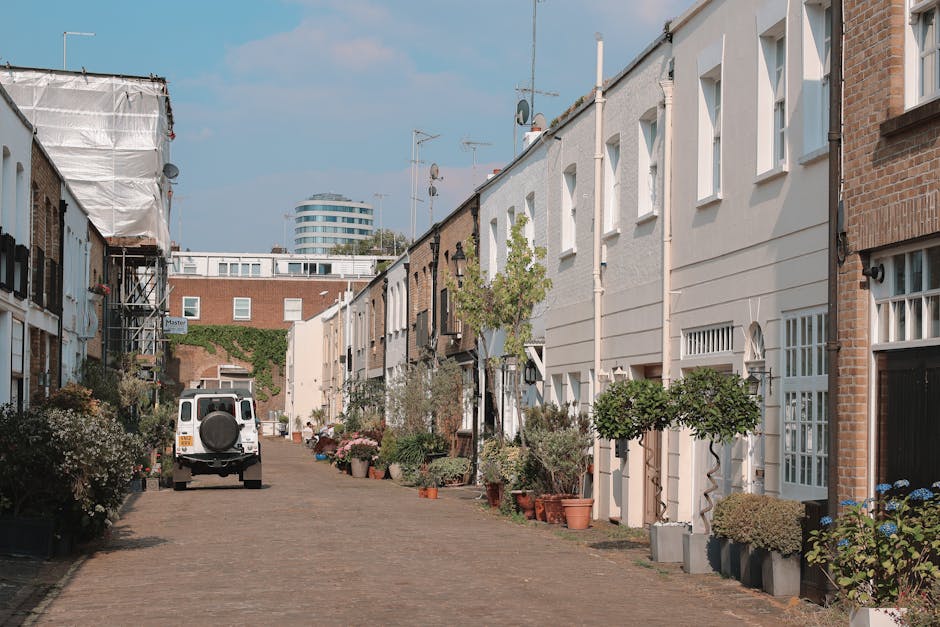
Gardeners for Cleveland Street shops offices and flats Fitzrovia
If you manage a shop front, office courtyard, or flat's shared outdoor space in Fitzrovia, you already know the small things matter. A tidy hedge, clean paving, fresh planting, and a lawn that doesn't look tired by Thursday can change how a property feels instantly. That is exactly where Gardeners for Cleveland Street shops offices and flats Fitzrovia come in: practical, reliable garden care shaped around busy buildings, tight access, and the daily reality of central London life.
It sounds simple enough, but it rarely is. Space is limited. Deliveries arrive when they feel like it. Residents may want quiet mornings, shop managers want the frontage looking sharp, and office staff need the building to feel calm rather than cluttered. In this guide, we'll walk through what professional gardening support for Cleveland Street properties really involves, why it matters, how it works, and how to choose the right approach without overcomplicating things.
Table of Contents
- Why Gardeners for Cleveland Street shops offices and flats Fitzrovia Matters
- How Gardeners for Cleveland Street shops offices and flats Fitzrovia Works
- Key Benefits and Practical Advantages
- Who This Is For and When It Makes Sense
- Step-by-Step Guidance
- Expert Tips for Better Results
- Common Mistakes to Avoid
- Tools, Resources and Recommendations
- Law, Compliance, Standards, or Best Practice
- Options, Methods, or Comparison Table
- Case Study or Real-World Example
- Practical Checklist
- Conclusion
- Frequently Asked Questions
Why Gardeners for Cleveland Street shops offices and flats Fitzrovia Matters
Cleveland Street sits in a part of London where outside space often has to work harder than the square footage suggests. A small planter outside a shop, a courtyard behind an office, or a communal terrace for flats can become a place that people notice more than you think. If it looks cared for, the whole property feels cared for. If it looks neglected, people notice that too. Fairly quickly, actually.
For businesses, landscaping is not just decoration. It shapes first impressions, supports staff wellbeing, and helps create a professional atmosphere before anyone even opens the door. For flats, it's about shared pride and day-to-day liveability. Residents may not say much about a neat entrance border, but they do feel it. Visitors feel it. And in Fitzrovia, where buildings are often close together and street-facing presentation really counts, that matters.
There's also the practical side. Plants outgrow containers. Weeds appear between paving joints. Leaves collect in awkward corners. A light-touch maintenance plan stops those issues from building into bigger jobs. That's the value of steady gardening support rather than the occasional panic tidy-up.
Key takeaway: for Cleveland Street properties, good gardening is less about making everything perfect and more about keeping outdoor areas presentable, safe, and manageable week after week.
How Gardeners for Cleveland Street shops offices and flats Fitzrovia Works
In practice, professional garden care for this part of Fitzrovia usually starts with a quick assessment of access, usage, and the type of space you have. A shopfront bed needs a different routine from a communal courtyard. An office may need discreet visits early in the morning, while flats may need scheduled work that respects residents and property managers. Nothing fancy, just common sense.
A typical service plan can include regular garden maintenance, seasonal planting refreshes, sweeping, pruning, deadheading, border care, and selective weed control. If the space has overgrown shrubs or screening, hedge trimming helps keep everything compact and tidy. If lawns are part of the site, lawn mowing keeps the area neat and consistent, which is especially useful where customers or tenants see the space often.
When a garden has become congested or neglected, a deeper reset may be needed first. That can mean garden clearance to remove waste, cut back overgrowth, and make the area manageable again. Once the site is back under control, the maintenance schedule becomes much easier to keep. Truth be told, that's the point where most people breathe out and think, right, now we can actually keep on top of it.
Depending on the property, the work may also include soft landscaping changes or small improvements to layout and plant choice. For a more involved refresh, services like landscape gardening or broader landscaping can help turn a tired outdoor area into something cleaner, more usable, and much easier to maintain.
Key Benefits and Practical Advantages
There are obvious benefits, and then there are the ones people only really notice after a few months.
- Better curb appeal: A tidy entrance or frontage makes a property feel active, cared for, and easier to trust.
- Less stress for managers: Regular work reduces the awkward last-minute scramble before inspections, visits, or tenant changeovers.
- Safer shared spaces: Overgrown plants, slippery leaf build-up, and obstructed paths can become avoidable issues.
- Improved consistency: Scheduled visits keep things looking steady rather than swinging between "fine" and "oh dear".
- Better use of limited space: Even tiny courtyards can be made more attractive and easier to navigate.
- Healthier planting: Routine care supports plant vigour and reduces the risk of beds becoming patchy or scruffy.
For offices, there's also an atmosphere benefit. A well-kept planting scheme can soften hard architecture and make a building feel less sterile. For flats, outdoor upkeep often reduces neighbour friction because shared spaces are clearly cared for. For shops, presentation is part of the brand story. Customers may never say, "nice clipped edge," but they do notice a neat one.
If you're comparing providers, it helps to check practical details early. For example, a clear services overview can make it easier to see whether the team offers routine upkeep, one-off clearance, soft landscaping, or specialist work. And if the budget needs thinking through, pricing and quotes should ideally be transparent enough to avoid guesswork later.
Who This Is For and When It Makes Sense
This type of gardening service is a strong fit for anyone responsible for an outdoor space that has to look good without demanding constant internal attention. In central London, that often means more people than you'd expect.
- Shop owners and retail managers who want a tidy frontage that supports footfall and brand perception.
- Office managers and facilities teams who need outdoor areas maintained without disrupting the working day.
- Landlords and managing agents looking after flats, terraces, and shared entry planting.
- Residents' associations that want common areas kept fair, neat, and low-drama.
- Mixed-use property owners balancing customer-facing presentation with residential privacy.
It makes sense to bring in support when the space starts taking more time than it should. Maybe the weeds keep coming back. Maybe the hedge is getting out of hand. Maybe the plant beds look fine in April but tired by August. That's normal. Gardens are living things, not display shelves. They do their own thing if you let them.
For some properties, the work is light and regular. For others, there's a seasonal pattern: spring tidy-up, summer maintenance, autumn leaf management, winter reduction and clearance. The best service plan usually follows the site, not the other way round.
Step-by-Step Guidance
If you're setting up gardening support for a Cleveland Street shop, office, or flat, here's a practical way to approach it.
- Assess the space honestly. Note what is there now: planting, lawn, hard surfaces, drainage issues, access restrictions, and any safety concerns.
- Decide what the space needs to do. Is it mainly decorative, or does it need to support seating, foot traffic, staff breaks, or resident use?
- Set a realistic maintenance rhythm. Some spaces need weekly attention, others only need fortnightly or seasonal visits. Don't overbuy the service.
- Prioritise the messy bits first. If the garden is overgrown, start with clearance and structure before thinking about planting upgrades.
- Choose plant choices that can cope. In busy London settings, robust planting often outperforms delicate, high-maintenance schemes.
- Agree access and timing in advance. Early mornings, quieter windows, and key-holder arrangements can prevent disruptions.
- Keep an eye on waste handling. Green waste should be removed or recycled responsibly, not left sitting around for days.
- Review the site after the first few visits. You'll quickly see whether the schedule is right or needs adjusting.
A good rule of thumb: if a space looks acceptable only right after the work is done, the plan is too thin. It should still look decent a week or two later. Not flawless. Just decent. There's a difference.
Expert Tips for Better Results
Here are the small things that tend to make the biggest difference.
- Use fewer plant species, but use them well. Repetition often looks cleaner in small urban spaces than a jumble of unrelated planting.
- Keep edges crisp. A trimmed edge around a bed or path gives a polished look faster than most people realise.
- Don't ignore container planting. Pots near entrances are high-impact areas and need watering, rotation, and replacement planning.
- Build in seasonal tweaks. What works in spring may feel flat by late summer. A small refresh helps enormously.
- Make clearance a normal task, not a crisis task. Once a site gets too far behind, everything costs more time and energy.
- Watch drainage and shade. Fitzrovia courtyards can be tricky; damp corners and low light can quietly wreck plant health.
One useful habit is to walk the space at different times of day. Morning light can hide some issues; evening shade shows others. You notice where leaves collect, where people cut across borders, where water lingers after rain. It's a bit unglamorous, yes, but that's where the smart decisions come from.
If you need specialist work such as overhead reduction, risky branch removal, or dealing with an unsafe tree, it's better to use a proper tree service rather than treating it like routine pruning. For that sort of work, tree lopping and removal is the more suitable route.
Common Mistakes to Avoid
Most problems in small urban gardens are surprisingly predictable. Avoiding them can save money, time, and a fair bit of annoyance.
- Waiting too long between visits. The site may look fine at first, then quickly tip into "needs a rescue" territory.
- Choosing plants for looks alone. Attractive but fragile planting often struggles in exposed, high-traffic, or shaded areas.
- Ignoring access logistics. A brilliant plan that can't be reached easily is not much use.
- Overcomplicating the design. In compact spaces, simple usually wins.
- Forgetting about waste removal. Green waste, broken pots, and old planting material can create clutter fast.
- Skipping seasonal cleanup. Leaves, dead stems, and blocked drains are the sort of thing that sneak up on people.
Another common one: assuming the same routine fits every site. It doesn't. A shop front exposed to constant passers-by needs different upkeep from a residential rear courtyard. A business entrance with planters may want sharp visual detail, while flats may prioritise durability and low disturbance. Easy mistake to make, though.
Tools, Resources and Recommendations
The right tools and materials don't just make the work faster; they make the result cleaner and more consistent. While the exact kit depends on the job, a reliable team will usually work with equipment suited to compact spaces, precise trimming, safe waste handling, and tidy finishing.
For the property owner or manager, the useful resources are less about kit and more about planning. A clear agreement on service scope, timing, and expectations prevents a lot of back-and-forth later. It's worth checking pages such as about the company if you want to understand how the service is approached, and recycling and sustainability if waste handling matters to your building or residents.
Recommended practical resources for your own use include:
- a simple site note listing access times and keyholder details
- photo records of the garden before and after major jobs
- a seasonal checklist for pruning, feeding, and clearing
- a basic map of planting areas, taps, storage, and awkward corners
- a contact list for urgent issues such as storm damage or broken planters
If you are comparing service providers, it also helps to read the pages that explain insurance and safety arrangements. Good operators should be comfortable discussing how they work around shared buildings, public-facing entrances, and the everyday risks that come with central London sites. No drama, just professionalism.
Law, Compliance, Standards, or Best Practice
For gardens in shops, offices, and flats, compliance usually means a mix of common-sense safety, responsible waste handling, respect for residents or neighbours, and careful work practices. You generally want a provider who treats the space as part of a functioning property, not an isolated patch of greenery.
That often includes sensible controls around access, slip hazards, tools, and debris. If work is being done near doors, walkways, or communal areas, the site should be left safe and clear. Waste should be handled responsibly, and any more hazardous work, such as tree reduction or removal, should be approached with the right caution and the proper level of expertise.
For reassurance, it is reasonable to ask about insurance, safety procedures, and how the team manages risk on site. You can also review pages like insurance and safety and health and safety policy to understand the service's standards and approach. If you are handling a building with shared access, that paperwork matters more than people think. Not glamorous, but important.
In a residential setting, it's also best practice to schedule noisy work thoughtfully, avoid blocking shared areas for longer than needed, and keep communication clear. For commercial properties, managers often value predictable visits and minimal disruption almost as much as the gardening itself.
Options, Methods, or Comparison Table
Not every property needs the same style of help. Below is a simple comparison of the most common options.
| Approach | Best for | Strengths | Watch-outs |
|---|---|---|---|
| Routine garden maintenance | Most shops, offices, and flats | Consistent presentation, manageable costs, low disruption | Won't fix severe neglect on its own |
| One-off garden clearance | Overgrown or neglected sites | Fast reset, clears clutter, makes the space usable again | Needs follow-up maintenance or the problem returns |
| Soft landscaping refresh | Sites that need improvement, not just upkeep | Better layout, improved planting, more visual impact | Usually takes more planning than basic maintenance |
| Structural landscaping work | Spaces needing a bigger redesign | Can transform underused areas, improve function | Higher commitment and more disruption during works |
In simple terms: if the space is basically fine, maintain it. If it is messy, clear it. If it is awkward or underused, improve it. That sounds almost too neat, but it's a useful way to think about it.
Case Study or Real-World Example
Imagine a small mixed-use building near Cleveland Street with a ground-floor shop, two offices above, and flats at the rear. The outdoor area includes a narrow frontage planter, a shaded side passage, and a modest communal yard. At first glance it doesn't look like much. But it gets seen all day long.
Before maintenance begins, the planter is patchy, weeds are pushing through the edges, and the yard has collected leaves, old pots, and a few tired shrubs that have grown wider than anyone planned. Residents have started avoiding the area. The shop owner thinks the frontage looks a bit scruffy. The office team, quite reasonably, just wants it all to feel less messy.
The first visit focuses on clearance and structure: remove waste, cut back overgrowth, restore edges, and simplify the cluttered planting. Once the space is under control, the team switches to regular maintenance with light pruning, seasonal tidying, and checks for problem areas. A couple of better-suited plants are introduced for the shady section, and the entrance planter gets a cleaner, more reliable look.
Nothing dramatic. No grand redesign. But the space becomes easier to use, easier to look after, and much more presentable. That is usually the sweet spot for this kind of property. Small wins, repeated well.
Practical Checklist
Use this checklist if you are planning gardening support for a shop, office, or flat in Fitzrovia.
- Identify every outdoor area that needs attention: frontage, courtyard, terrace, roof space, side passage, or shared entrance.
- Decide whether the priority is presentation, plant health, access safety, or all three.
- Check how often the space is seen by customers, residents, staff, or visitors.
- Note access issues, gates, keys, time restrictions, and any quiet-period requirements.
- List urgent problems first: weeds, overgrowth, dead plants, moss, debris, or broken containers.
- Choose whether you need regular maintenance, clearance, landscaping, or a mix of services.
- Ask how waste will be removed or recycled after the work is done.
- Confirm safety and insurance expectations before any work begins.
- Set a review point after the first few visits.
- Keep the plan simple enough that people will actually stick to it.
If you can tick most of those off before the first visit, you are already ahead of the game. Really. Most gardening headaches start with vague expectations, not bad gardening.
Conclusion
For Cleveland Street shops, offices, and flats, the best gardening support is the kind that quietly keeps life running better. It should make the entrance smarter, the shared spaces calmer, and the property easier to manage without creating extra work. Whether you need ongoing garden maintenance, a reset through garden clearance, or help shaping a more polished outdoor area through landscaping, the goal is the same: a space that feels looked after and stays that way.
In a busy part of Fitzrovia, that steady care goes a long way. It helps people relax a little when they arrive, and it stops small problems from becoming big ones. Nice and simple, really.
Get a free quote today and see how much you can save.
And if you are still deciding, that's fine too. A good outdoor space usually starts with one sensible decision, then a few more. No rush, no fuss. Just a better bit of London, kept well.
Frequently Asked Questions
What do gardeners for Cleveland Street shops offices and flats Fitzrovia usually do?
They handle routine upkeep such as pruning, weeding, mowing, clearing, planting care, and tidying for commercial or residential outdoor spaces. The exact mix depends on the property.
How often should a shopfront or office garden be maintained?
It depends on how visible the space is and how fast it grows, but many central London properties benefit from regular visits rather than occasional big clear-ups. The more visible the area, the more often it usually needs attention.
Is one-off garden clearance enough for a neglected site?
It can be the right first step, especially if the space is overgrown or cluttered. But in most cases, clearance works best when followed by regular maintenance so the problem does not return.
Can a small courtyard or terrace really make a difference to a building?
Yes, absolutely. Even a modest planting area can improve how a property feels, especially in a busy urban setting where people notice entrance areas and shared spaces every day.
What should I look for when choosing a gardener in Fitzrovia?
Look for clear communication, a realistic maintenance plan, sensible safety practices, and a service mix that matches your space. It also helps if they understand access restrictions and the pace of central London properties.
Do offices need different garden care from flats?
Usually, yes. Offices often need discreet scheduling and a polished appearance, while flats often need more focus on shared access, resident convenience, and keeping communal areas tidy without disruption.
What if the garden is too overgrown to maintain properly?
That is when clearance or a bigger reset is usually needed first. Once the site is back under control, maintenance becomes much easier and more cost-effective.
Are hedge trimming and lawn mowing part of regular maintenance?
They often are, if the property has hedges or lawned areas. In many cases, these services are included as part of a broader garden care plan rather than treated as separate emergencies.
How do gardeners handle waste from the work?
Good practice is to remove or responsibly recycle green waste and leave the site tidy. If waste handling matters to your building, it's worth asking about the provider's approach before work starts.
Can gardening work be done without disturbing residents or staff?
Usually, yes, if timing and access are planned properly. Early mornings, low-noise routines where possible, and clear communication make a big difference in shared buildings.
Do I need landscaping, or just maintenance?
If the space already works but needs regular upkeep, maintenance is often enough. If the layout, planting, or usability is poor, then landscaping may be the better choice. A quick site review usually makes the answer clearer.
Where can I learn more about the company's approach?
You can read the pages on about us, services overview, and the policies covering safety, sustainability, and payments. Those pages give a useful picture of how the work is organised.